The Museum of Urban and Contemporary Art (MUCA) opened in 2016 as Germany's first museum for urban art.
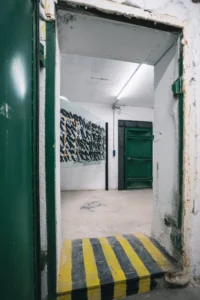
In 2019, the MUCA added a former air raid shelter to its premises. After years of vacancy, it has since been used as an art bunker.
The bunker is directly adjacent to the MUCA main building. In the former air raid shelter from the Second World War, the MUCA usually shows special exhibitions or special formats, which can be staged particularly impressively in this characteristic building.
The history of the bunker in Hotterstraße in Munich dates back to 1941. Since the end of the war, the space of the former air raid shelter has been used in a variety of ways, as a shelter for the homeless, a hotel and, from 2012, even briefly as the „Herr Hotter“ discotheque.
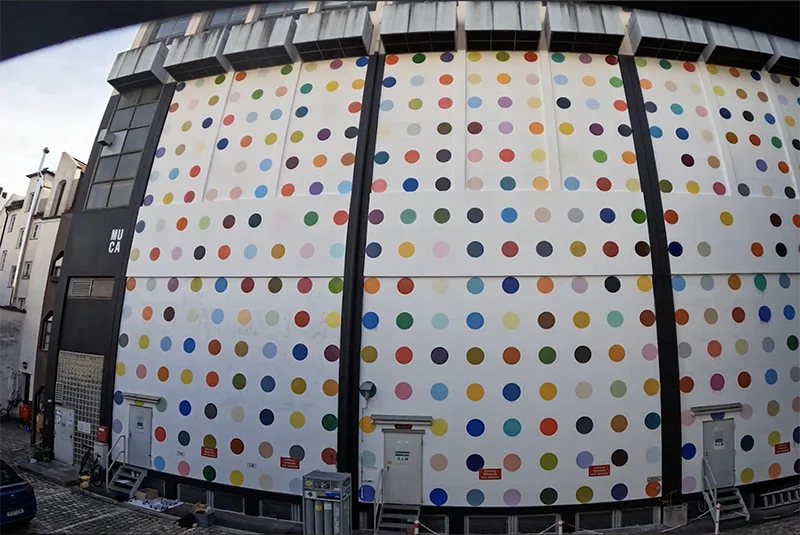
Our Giant Wall awaits you on the outdoor areas of the MUCA with changing, large-scale outdoor art projects, most recently designed as a huge spot painting by Damien Hirst.
In addition, the green space in front of the MUCA Bunker is home to changing installations and sculptures. Until December 2024, for example, the large „Pegasus“ sculpture by Damien Hirst was on display there.
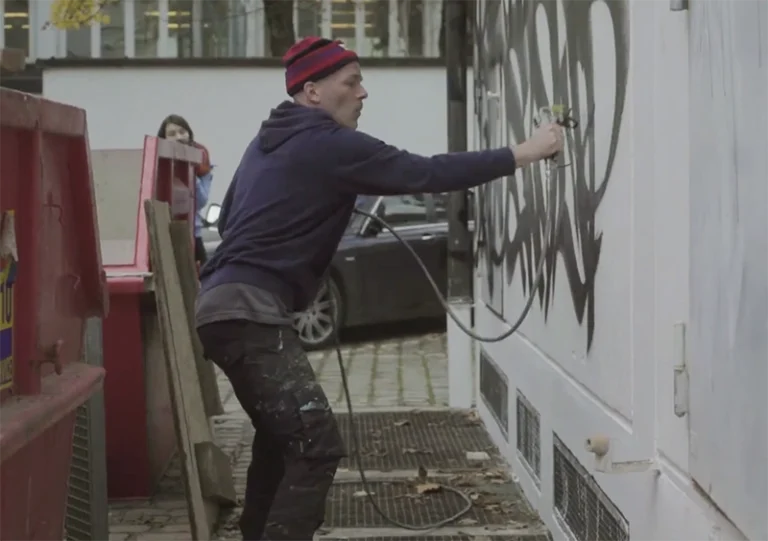
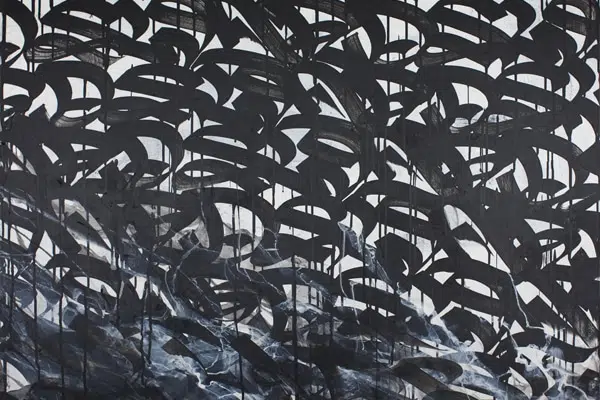
The Berlin Caligraffiti artist Stohead.
The MUCA is dedicated to integrating urban art into contemporary art discourse and exhibiting the most celebrated women artists of the 20th and 21st centuries. Since its inception, the MUCA has become a leading authority in collection building, with a focus on significant works by women artists known for utilising the urban landscape as part of their practice.
The building is a decommissioned substation belonging to Stadtwerke München.
The MUCA's permanent collection began in 1998.
In 2014, the MUCA curated the design of the „Bridge Gallery“ on Candidplatz. Almost 20 national and international artists designed the pillars of the Candidbrücke. The „Bridge Gallery“ is also a stop on the MUCA Street Art Bike Tour, which always takes place from May to September.
In 2015, the MUCA took over the disused substation in Hotterstraße and converted it into today's MUCA Museum, which opened in 2016.
In 2018/19, the MUCA realised the first KUNSTLABOR as an interim use of the vacant Tengelmann complex. 50 artists transformed the building into a walk-in work of art. The continuation of this project opened in Dachauer Straße in 2021: KUNSTLABOR 2, an art and cultural centre with 60 art spaces, workshops and studios.
The term „calligraffiti“ was coined to describe the fusion of graffiti and calligraphy. Stohead, a leading figure in this style, designed the façade of the MUCA for its opening, thereby already establishing a link to one of the museum’s first exhibitions – ‘The Art of Writing’.
By the Munich artist Alex Deubl.
From the German-French artist L.E.T.
The image of the two women was created by the German artist CASE, who is known for his photorealistic spray art.
The MUCA is dedicated to integrating urban art into contemporary art discourse and exhibiting the most celebrated women artists of the 20th and 21st centuries. Since its inception, the MUCA has become a leading authority in collection building, with a focus on significant works by women artists known for utilising the urban landscape as part of their practice.
In 2014, the MUCA curated the design of the „Bridge Gallery“ on Candidplatz. Almost 20 national and international artists designed the pillars of the Candidbrücke. The „Bridge Gallery“ is also a stop on the MUCA Street Art Bike Tour, which always takes place from May to September.
In 2015, the MUCA took over the disused substation in Hotterstraße and converted it into today's MUCA Museum, which opened in 2016.
In 2018/19, the MUCA realised the first KUNSTLABOR as an interim use of the vacant Tengelmann complex. 50 artists transformed the building into a walk-in work of art. The continuation of this project opened in Dachauer Straße in 2021: KUNSTLABOR 2, an art and cultural centre with 60 art spaces, workshops and studios.
In front of the toilets, designed by Matthias Mross.
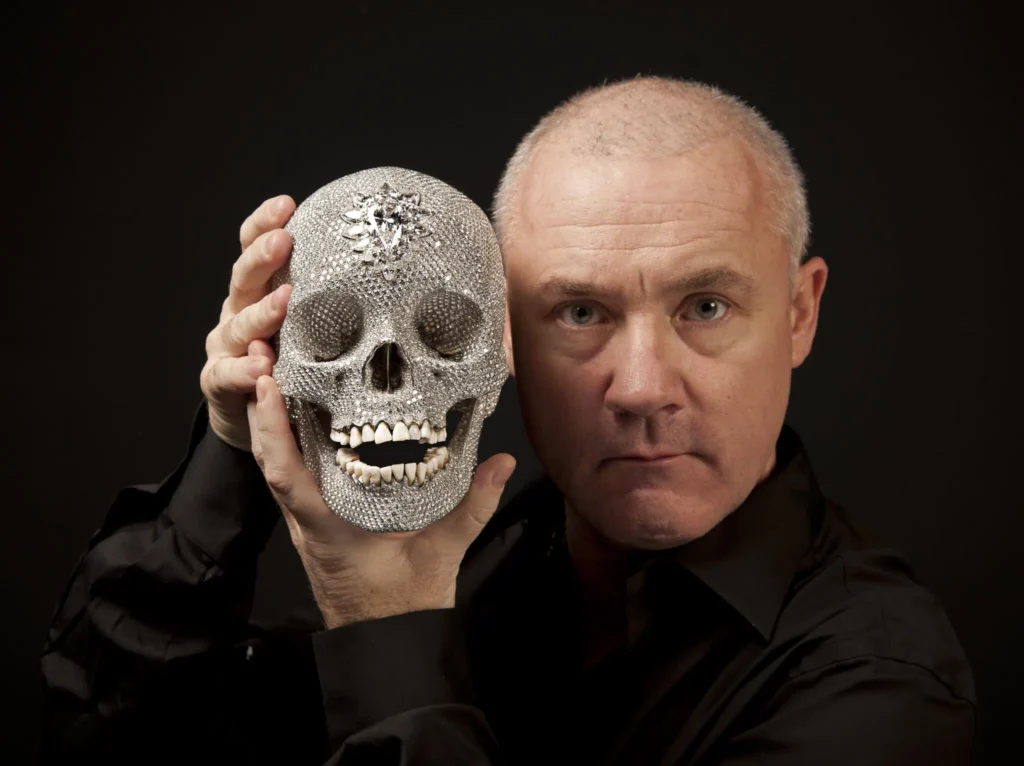
The most expensive work of art was Damien Hirst's diamond-studded skull „For the Love of God“. The famous platinum cast of a human skull set with 8,601 diamonds is estimated to cost around 75 million euros.
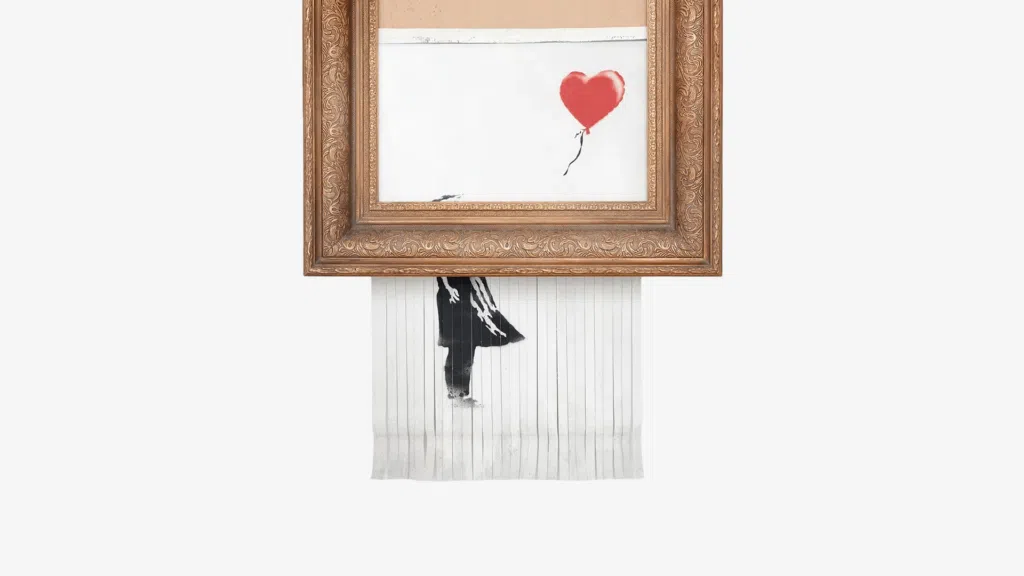
The collection includes many renowned artists, particularly well-known representatives are, for example, the British street artist Banksy, the British conceptual artist Damien Hirst, the French artist JR, the US artist Shepard Fairey or the Japanese artist Yayoi Kusama.