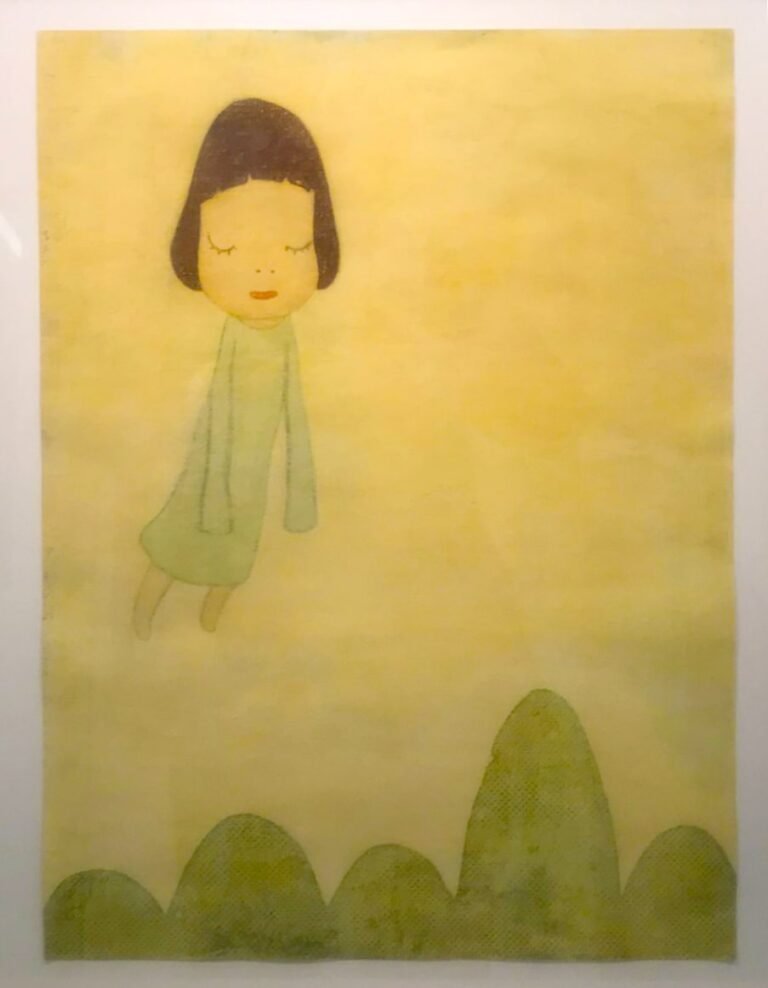
Yoshitomo Nara, born in 1959 in the Japanese prefecture of Aomori, is today one of the world's most important representatives of contemporary Japanese art. His work is often associated with the neo-pop movement that emerged in the 1990s, as he created a new popular aesthetic with his iconic „Kawaii“ (cute) figures. His education first took him to the Aichi University of the Arts before he moved to Germany to study at the renowned Kunstakademie Düsseldorf. This time in Europe significantly shaped his style and enabled him to translate Western and Eastern cultural influences into a universal visual language.
Nara's work is characterised by a fascinating duality: his cartoon-like portraits of children and animals appear innocent at first glance, but on closer inspection often reveal a deeper melancholy, defiance or even subtle aggression. These powerful figures often gaze directly at the viewer, eliciting an immediate emotional response. While Nara himself emphasises that his work is not directly influenced by manga, the figures reflect the post-war influences of Western pop culture, particularly through Disney animation and American films, on Japanese visual culture.
In addition to painting, Nara is a versatile artist who creates three-dimensional works in wood, ceramics and bronze. He is also known for his expansive installations, in which he often constructs small houses reminiscent of childhood hideaways. Since his return to Japan in 2000, his work has been represented in the world's most important museums. Nara's art appeals to a contemporary audience by addressing feelings of loneliness, rebellion and nostalgia, blurring the boundaries between high culture and pop aesthetics.