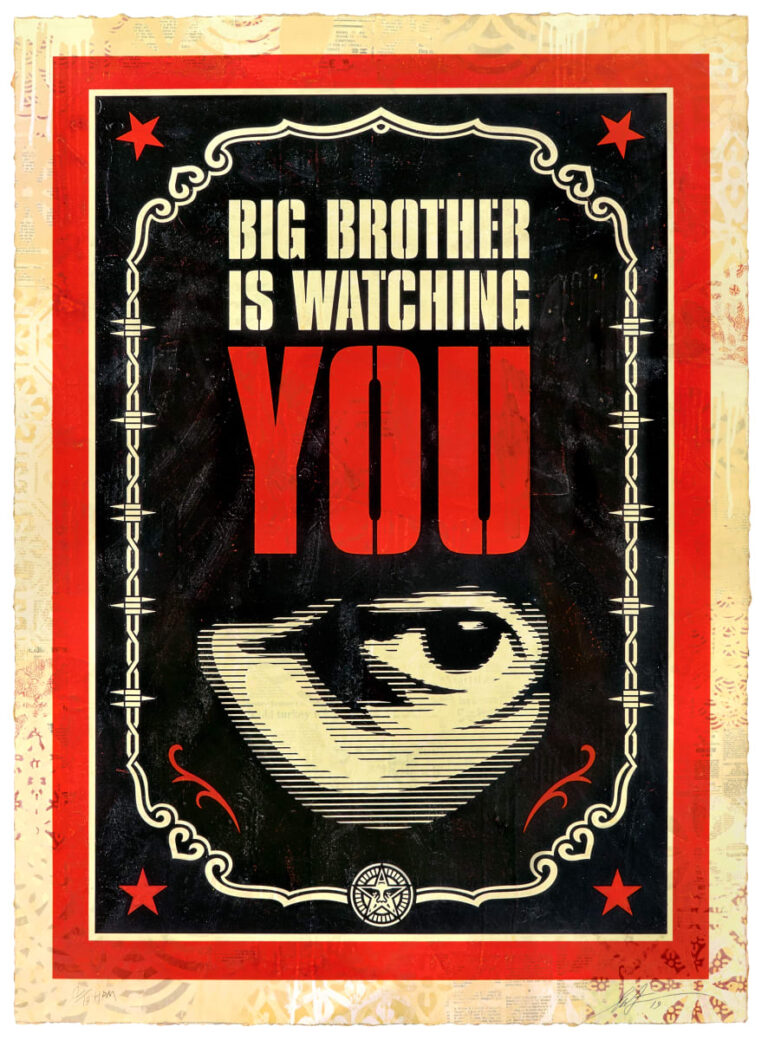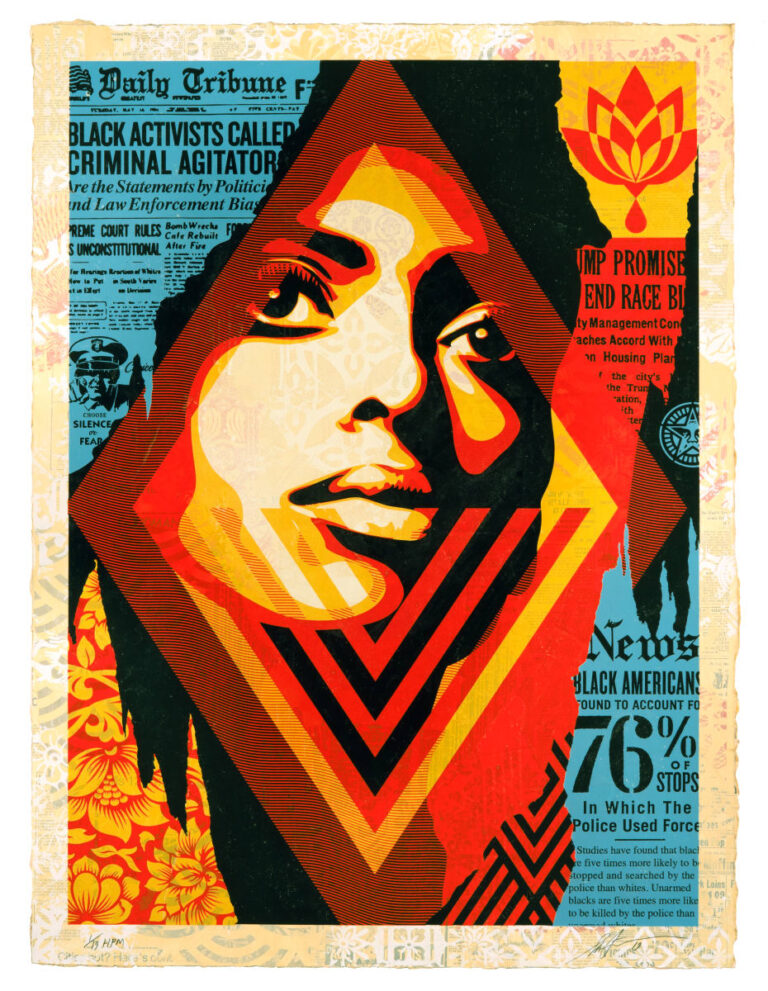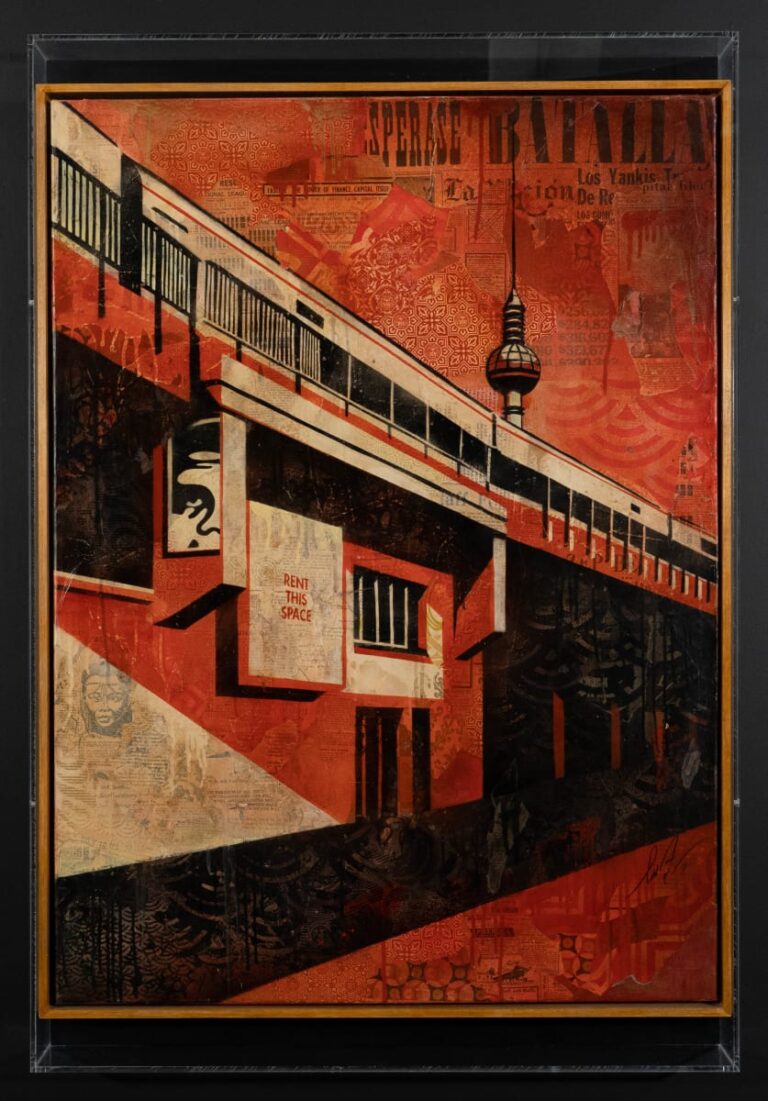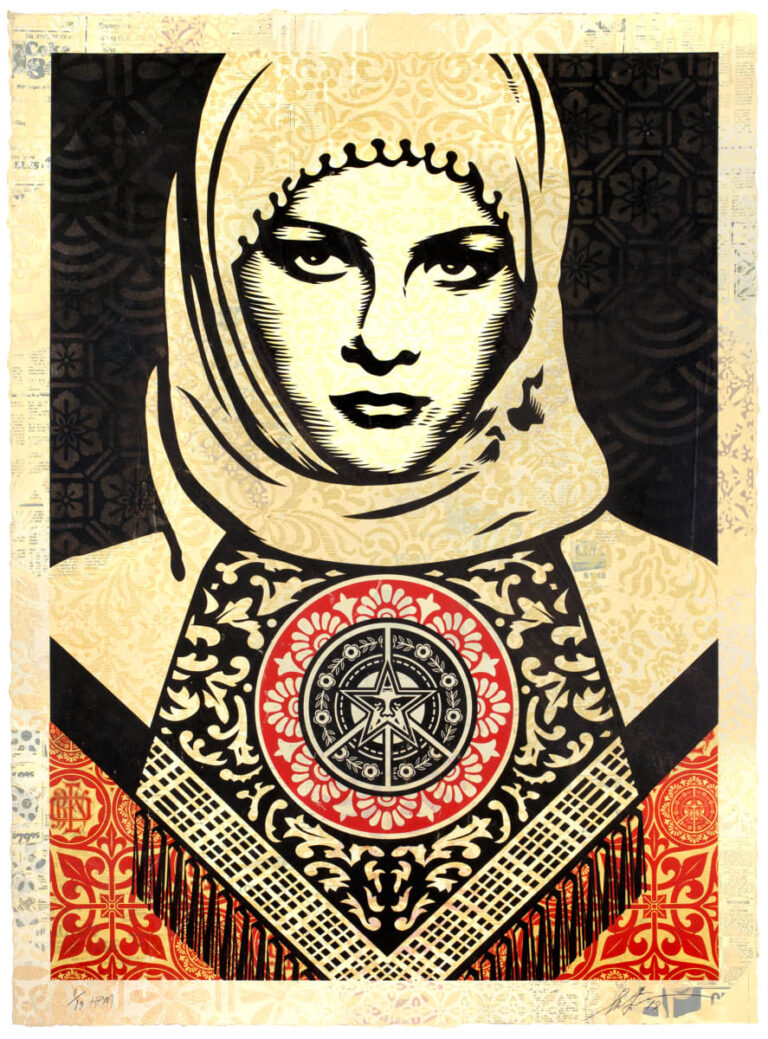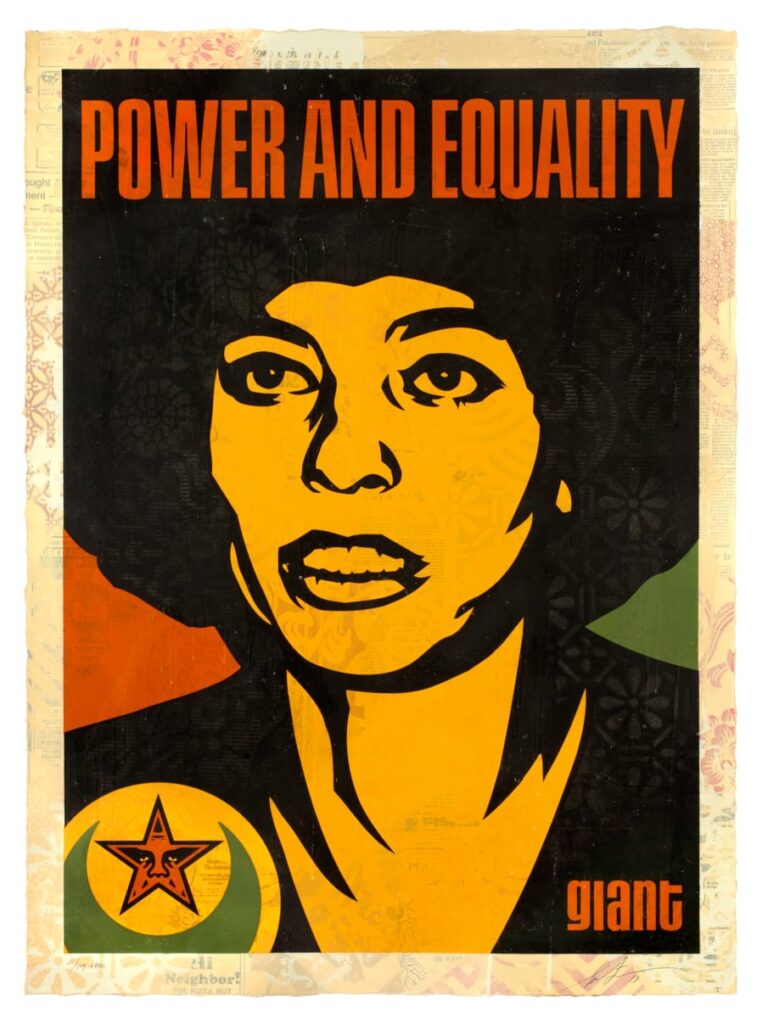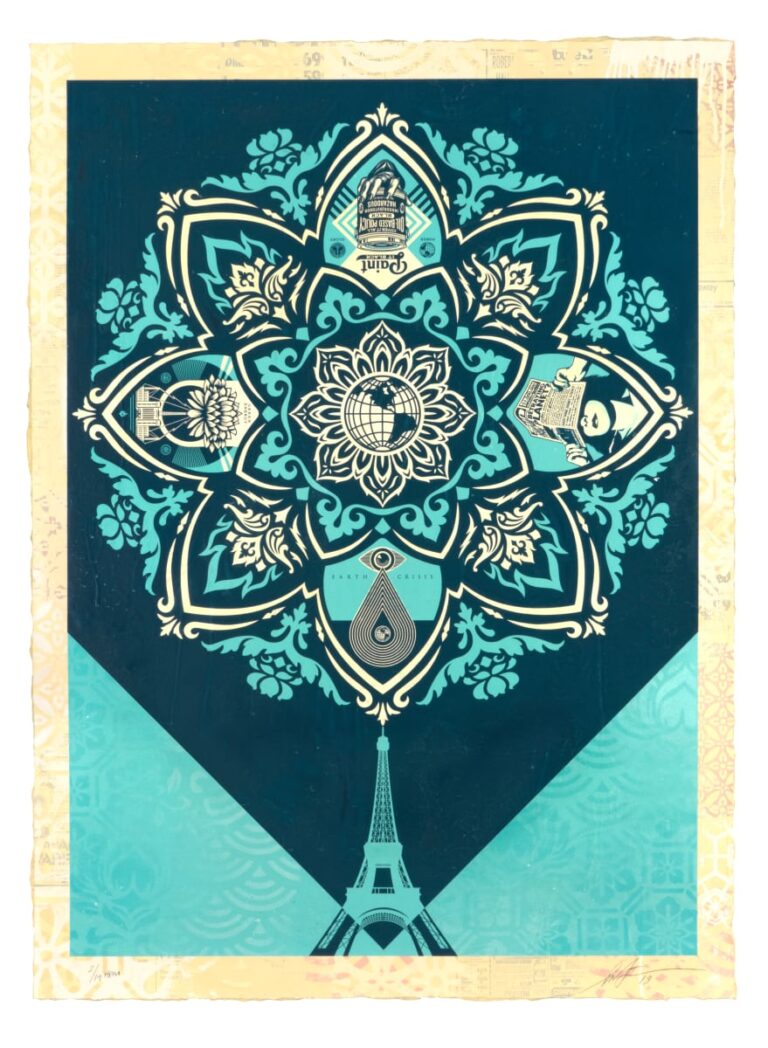
Frank Shepard Fairey, born in South Carolina in 1970, is one of the most influential contemporary artists and graphic designers of his generation. His early passions for skateboarding and punk music, as well as a drastic diabetes diagnosis at the age of 15, drove him to realise his artistic visions with high productivity. Fairey is known for blurring the lines between art, activism and commercial design to critically scrutinise social and political ideologies.
His breakthrough came in 1989 with the sticker campaign „Andre the Giant Has a Posse“, which developed into the worldwide phenomenon „OBEY GIANT“. By combining a portrait of a wrestler with the demand „OBEY“, Fairey encourages the viewer to reflect on the mechanisms of propaganda and authority as well as their own perception of urban space. Influenced by George Orwell and artists such as Barbara Kruger and Keith Haring, he uses the „seductive language“ of advertising to spread messages about state surveillance, class systems and resistance.
Technically, Fairey utilises a variety of media, including screen printing, stencils, poster prints and monumental murals. His style is often modelled on the bold aesthetics of 20th century political iconography, which he inverts to promote progressive ideas. He achieved worldwide fame in particular through the „Hope“ portrait of Barack Obama (2008) and his cover for Time Magazine (2011).
Despite his success with the fashion label „OBEY clothing“ and his design agency Studio Number One, Fairey remains true to his roots in the street art movement. One example of his political engagement in public space is the 15×13 metre mural „Paint it black“ in Munich, with which he protested against environmental destruction and the power of oil companies. His works are now part of renowned collections such as the Institute of Contemporary Art in Boston.