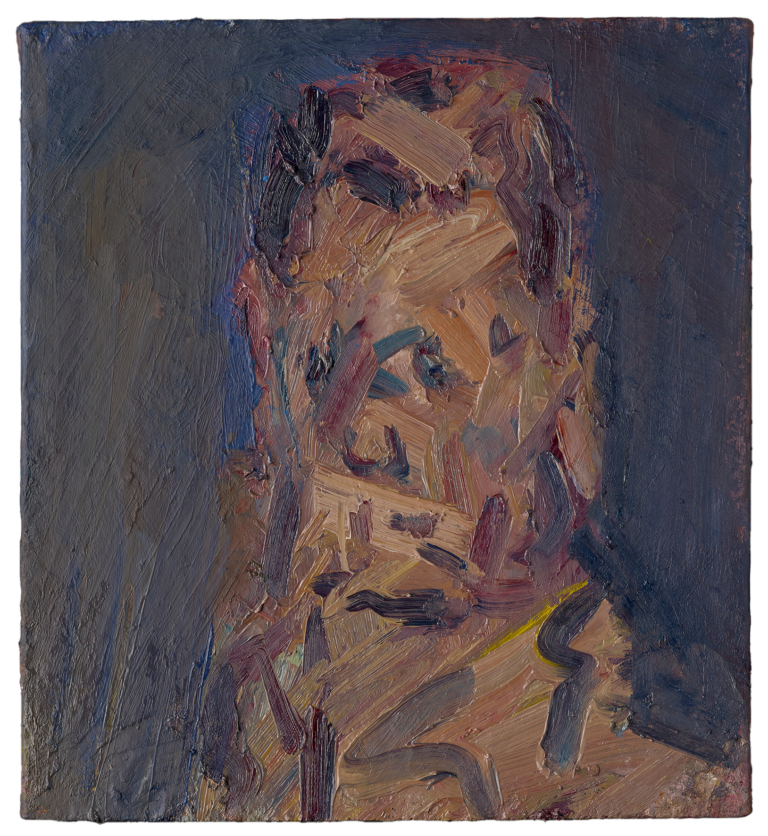
Frank Auerbach (1931-2024) was an important British post-war painter who came to England as a Jewish refugee from Berlin. As a core member of the „London School“, he had a decisive influence on 20th century figurative painting. His work is characterised by an extremely bold, impasto application of paint, which he developed during his studies at the Royal College of Art. He favoured motifs from his immediate surroundings, including urban landscapes near his London studio and portraits of people familiar to him.
Auerbach's working method is characterised by continuous development and intensity, whereby he sometimes pushes the abstraction of his figures to the limits of what is recognisable. He has been highly honoured internationally for his work; in 1986 he received the Golden Lion at the Venice Biennale together with Sigmar Polke. His importance is emphasised by major retrospectives in world-leading institutions such as Tate Britain and the Rijksmuseum. Auerbach is regarded as one of the most productive painters of his generation, whose unmistakable style pushed the expressive possibilities of oil paint to their limits.